South Africa’s connection to Europe has been significantly upgraded as Swiss International Air Lines introduces its new Airbus A350-900 on the Johannesburg–Zurich route. With greater passenger capacity, improved fuel efficiency and a completely redesigned cabin, the aircraft represents more than a change of equipment. It reflects the growing importance of modern, efficient long-haul aviation in connecting Africa with the rest of the world.
A NEW ARRIVAL IN JOHANNESBURG
For international airlines operating between Africa and Europe, aircraft efficiency, passenger comfort and route capacity have become increasingly important. Rising operating costs, environmental pressures and changing traveller expectations are influencing how airlines invest in their long-haul fleets.
Swiss International Air Lines (SWISS) has taken another step in that direction by introducing its Airbus A350-900 on the daily Johannesburg–Zurich service, replacing the four-engined Airbus A340-300.
The new aircraft began operating on the route on 25 October 2026, making Johannesburg one of the first destinations in the airline’s network to receive its new SWISS Senses cabin experience.
For South African travellers, the arrival brings additional capacity and a more contemporary onboard experience. For SWISS, it represents an investment in a market that remains important to its international network.
The A350 accommodates 242 passengers, providing 3,388 seats per week between Johannesburg and Zurich, approximately 12% more capacity than the aircraft it replaces.
That additional capacity matters. Strong international connectivity supports tourism, business travel, and trade, while giving travellers more opportunities to connect through major European aviation hubs.
EFFICIENCY TAKES CENTRE STAGE
Beyond the redesigned cabin, one of the A350’s most important improvements is its operating efficiency.
According to SWISS, the twin-engined aircraft delivers about 25% lower fuel consumption and carbon dioxide emissions than previous-generation aircraft, while its noise footprint is around 50% smaller.
In an industry where fuel remains one of the largest operating expenses, these improvements have considerable commercial significance.
Every litre saved matters.
The A350 also uses extensive lightweight composite materials, which make up more than 50% of its airframe. Combined with modern engines and aerodynamic improvements, this reduces fuel consumption over long distances.
For airlines operating routes between continents, even relatively modest efficiency gains can make a substantial difference when calculated across hundreds of flights.
Replacing the A340-300 with the A350-900 therefore goes beyond offering passengers a newer aircraft. It forms part of the wider aviation industry’s efforts to improve operating efficiency while reducing the environmental impact of long-haul flying.
SWISS plans to operate ten Airbus A350-900 aircraft by the beginning of 2030, gradually strengthening its long-haul fleet with newer-generation technology.
A DIFFERENT EXPERIENCE ABOVE THE CLOUDS
The most visible change for passengers is SWISS Senses, the airline’s redesigned long-haul cabin experience, introduced across First, Business, Premium Economy and Economy Class.
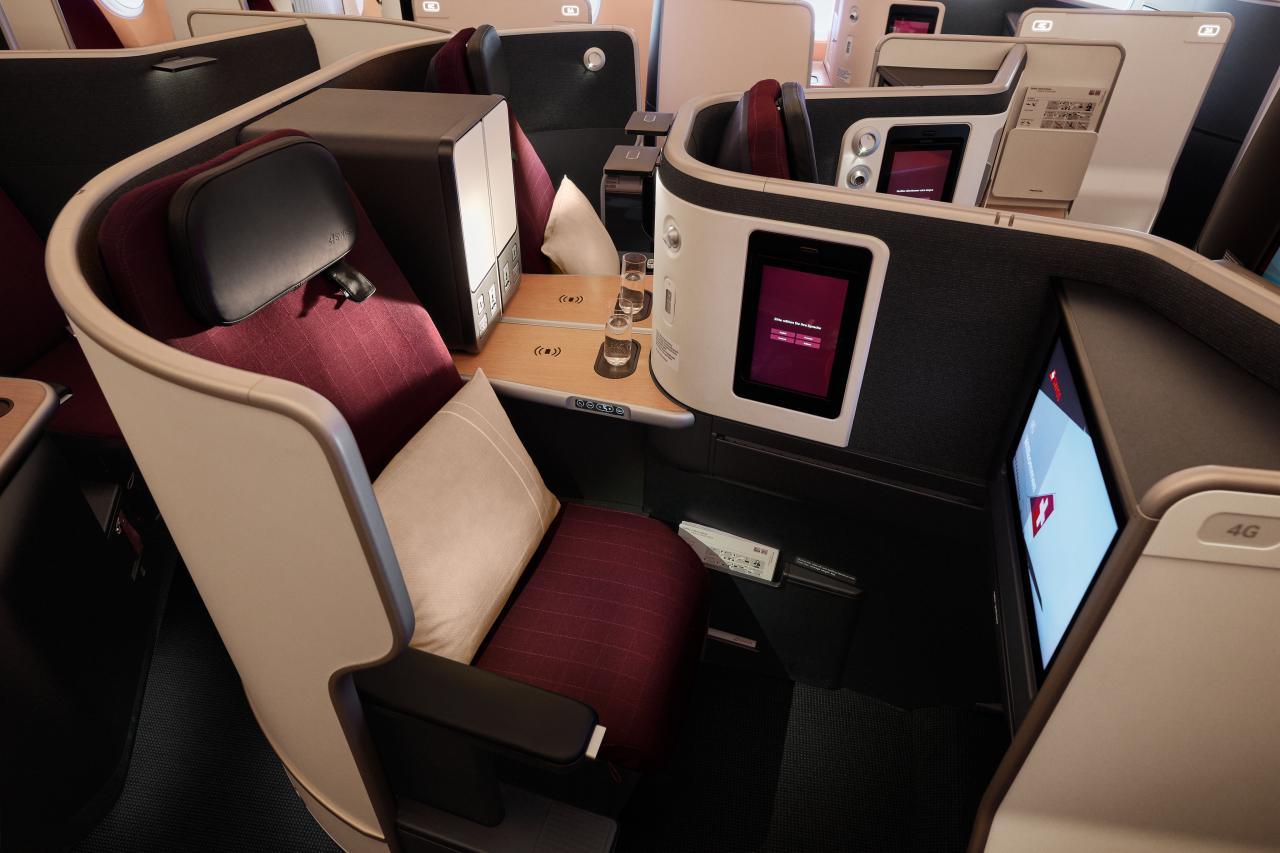
The new cabin combines updated seating, advanced inflight entertainment, improved privacy and human-centric lighting designed to support passengers’ natural body clocks during overnight flights.
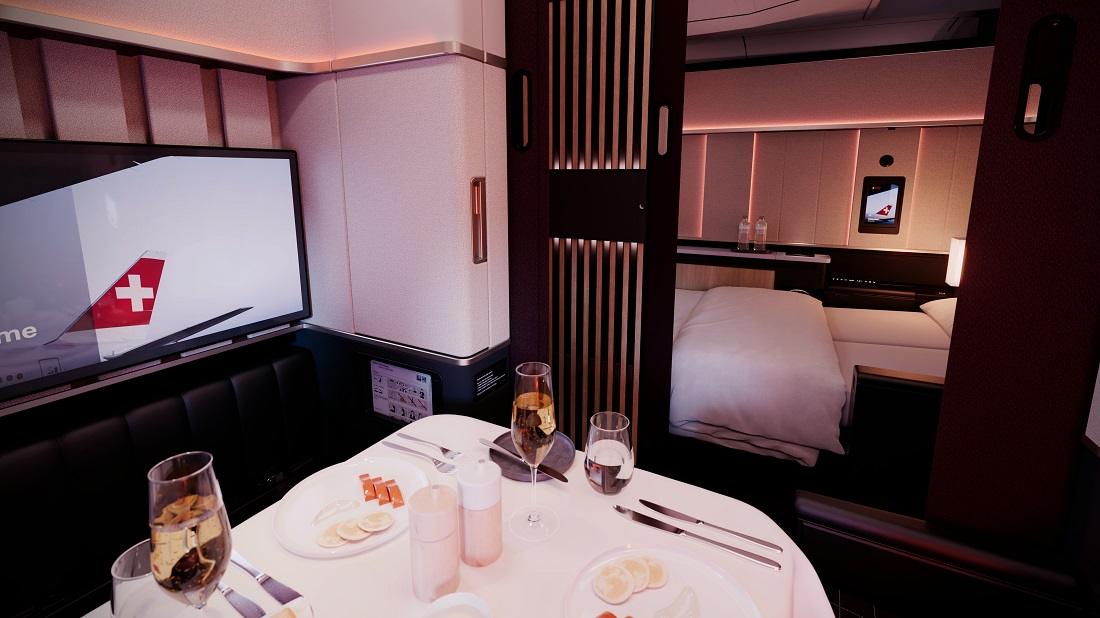
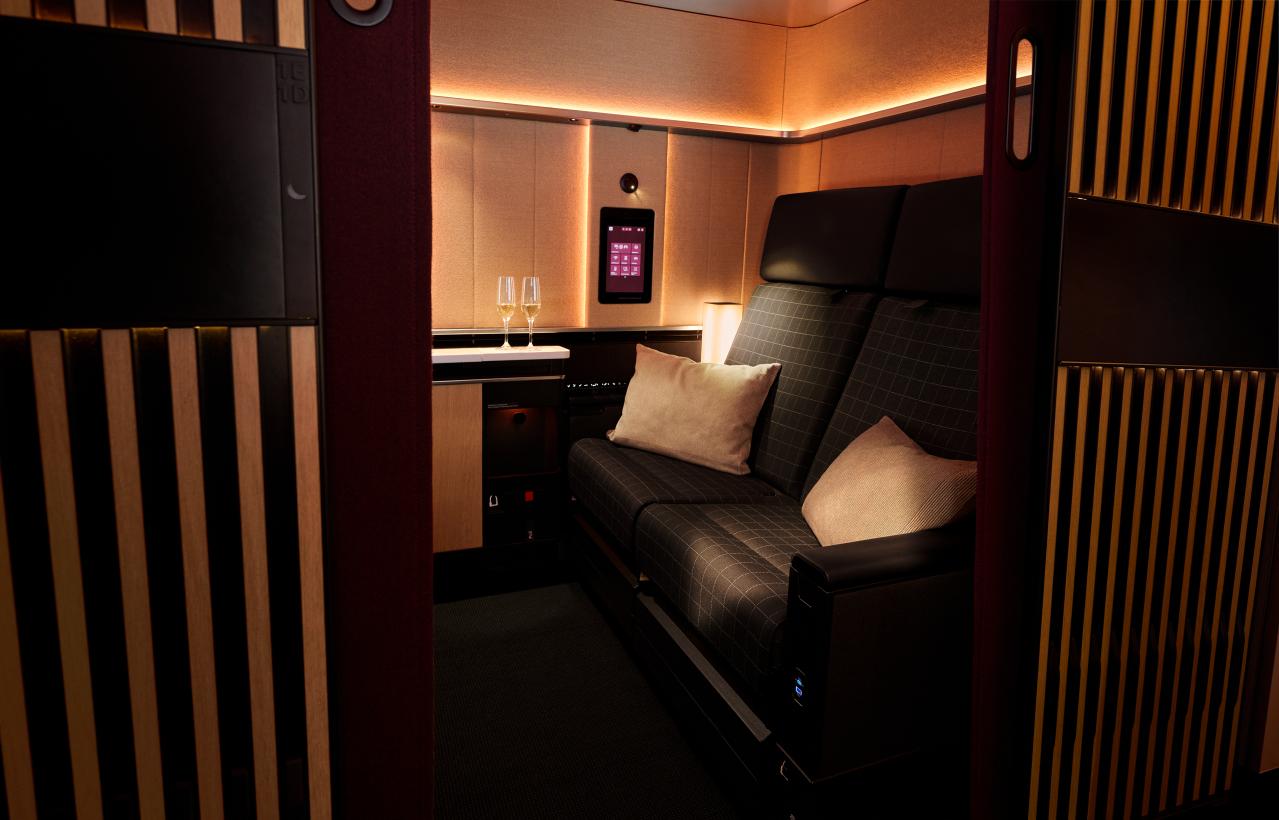
At the top of the range, SWISS First introduces fully enclosed private suites. The accommodation features walls measuring 1.8 metres in height, with the Single Suite offering a 200 cm bed and a 32″ 4K OLED display.
The Suite Plus provides space for two passengers, including a 200 cm double bed and a 43″ entertainment screen. Both configurations feature seat heating and cooling, personal wardrobes and dedicated dining areas.
SWISS Business introduces five seating options, including private suites with closable doors, additional legroom configurations and beds measuring at least 2 metres in length. All seats provide direct aisle access.
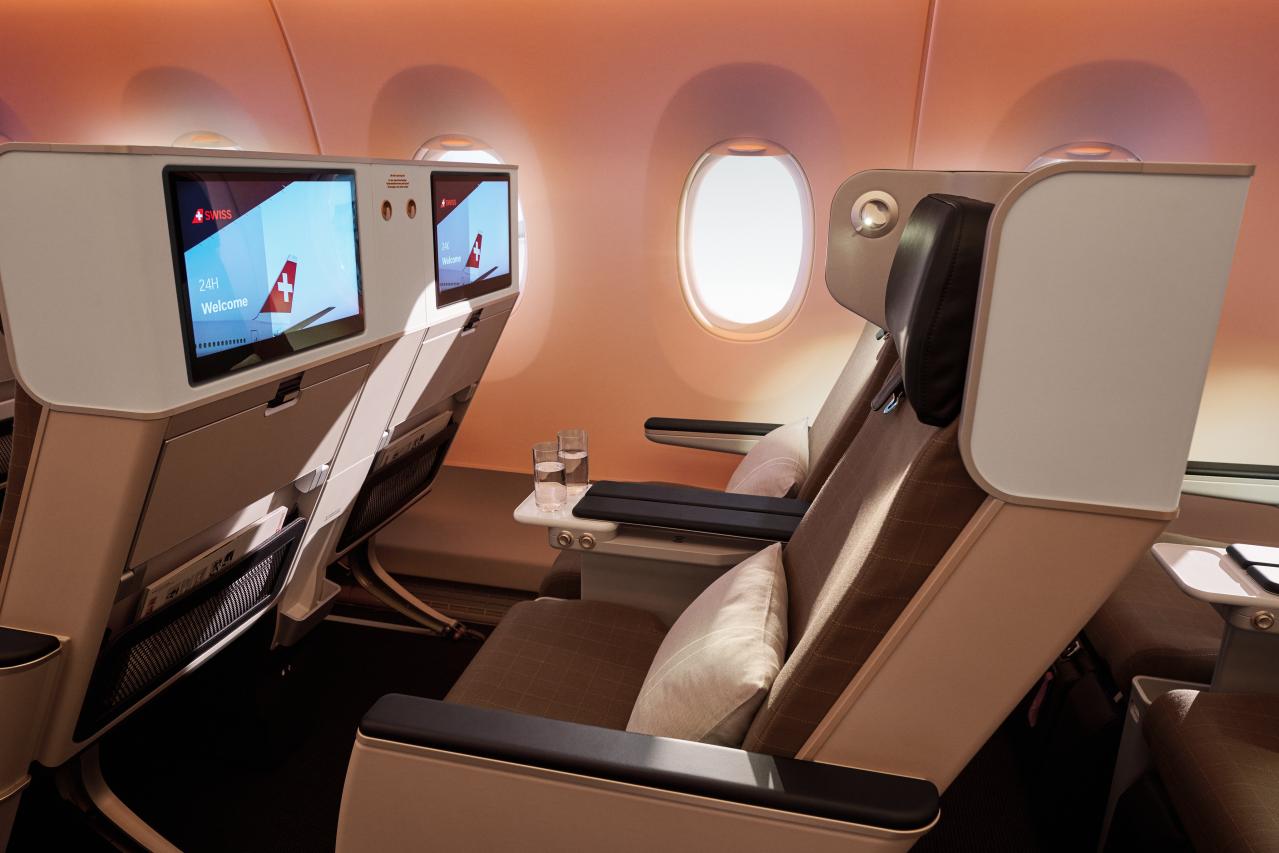
Premium Economy offers more personal space, a fixed-shell seating design, and a 15.6″ entertainment screen, while Economy passengers benefit from updated seating, adjustable headrests, and 13.3″ displays.
Bluetooth connectivity for personal headphones and improved digital functionality extend across the cabin, reflecting the growing importance of technology in modern air travel.
The improvements demonstrate how airlines are increasingly competing on the complete passenger experience rather than simply transporting customers between destinations.
CONNECTING SOUTH AFRICA TO EUROPE
Johannesburg’s position within the SWISS network provides more than a direct connection to Switzerland. Zurich serves as an important European aviation hub, connecting travellers to destinations including London, Paris, Geneva, Brussels, Frankfurt and Munich.
Through its interline agreements with South African Airways and Airlink, SWISS also provides connecting travel options from other South African cities to Johannesburg, allowing passengers to continue their journeys to Europe under a single booking.
For travellers, that means improved convenience, with baggage checked through to the final destination and connecting flights coordinated through the airline partnerships.
Rene Koinzack, Senior Director Sales, North, East and Southern Africa at the Lufthansa Group, says South Africa remains an important market for the airline.
According to Koinzack, the introduction of SWISS Senses reflects the expectations of South African travellers, particularly those accustomed to overnight long-haul journeys where comfort, privacy and quality service are important.
The route’s increased seating capacity also creates additional opportunities for business and leisure travel between the two regions.
Return fares between Johannesburg and Zurich start from R12,500, with SWISS indicating that standard fares across its travel classes remain unchanged following the introduction of the new aircraft. Selected Business Class seats offering additional privacy and comfort will attract supplementary charges.
MORE THAN PASSENGER AVIATION
Although much of the attention surrounding the A350 has focused on the new passenger cabin, aircraft modernisation also has wider implications for international aviation and trade.
Modern long-haul aircraft form part of the infrastructure connecting businesses, markets and supply chains across continents. Reliable air services support industries that depend on international travel and time-sensitive movement between economic centres.
SWISS also operates Swiss WorldCargo, its dedicated airfreight division, which serves businesses that need international transport for high-value, time-critical, and care-intensive goods.
While the airline has not announced specific additional cargo capacity for the Johannesburg A350 service, introducing a newer-generation aircraft reinforces the importance of fleet investment in maintaining reliable international air connections.
For Southern Africa, access to established European aviation networks remains important for trade, tourism and business development.
Aircraft technology may continue to evolve, but the commercial requirement remains familiar: move people and goods efficiently, reliably and at a cost that supports sustainable operations.
LAST WORDS
The introduction of the Airbus A350-900 on the Johannesburg–Zurich route represents an important development for SWISS and its South African operations.
With 242 seats, about 12% more passenger capacity, a completely redesigned cabin, and claimed fuel and emissions reductions of around 25% compared with previous-generation aircraft, the A350 brings meaningful improvements to the airline’s long-haul offering.
For passengers, the most noticeable changes will be comfort, privacy and technology. For the airline, greater efficiency and fleet modernisation form part of a longer-term investment in international connectivity.
And for South Africa, the arrival is another reminder of the importance of remaining connected to the world’s major aviation networks. Whether moving people, supporting business, or strengthening international trade, aviation remains an essential part of Africa’s economic journey.
Report by Haulin’ News | Images © Swiss International Air Lines