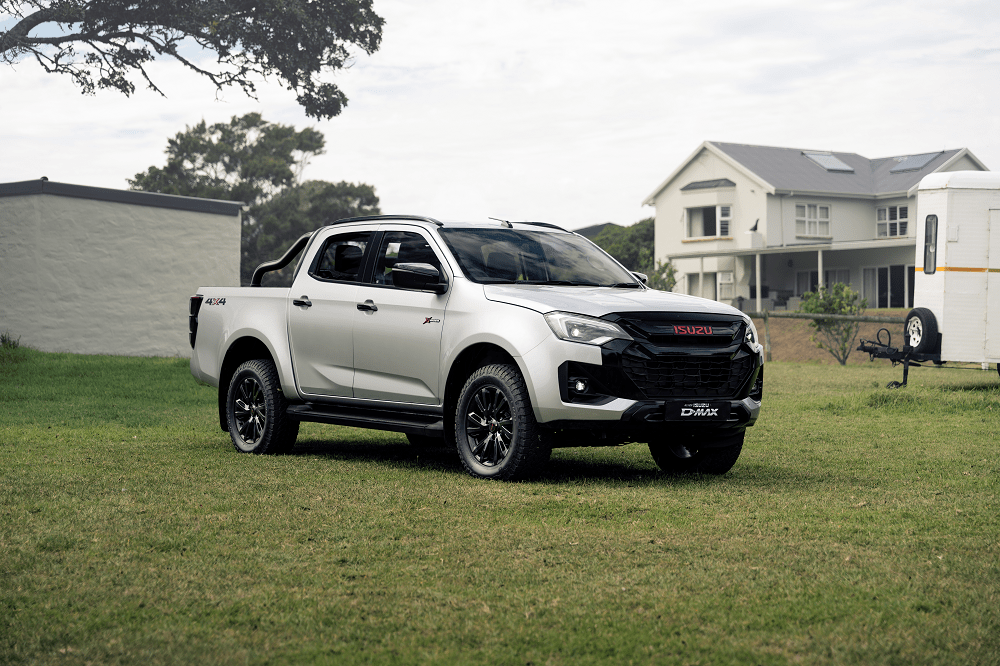
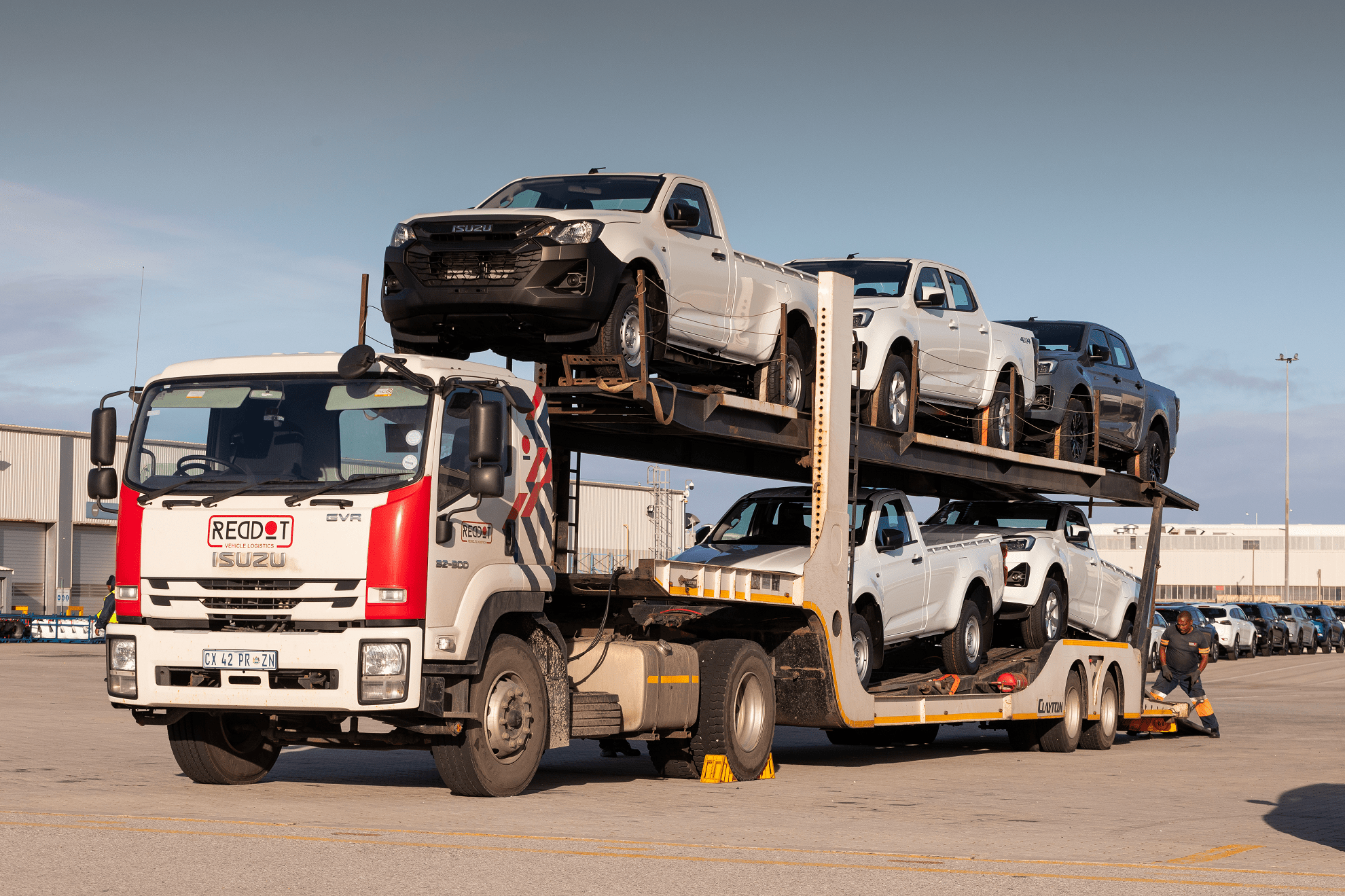
Before the new D-MAX reaches a farm gate in Zambia, a construction site in Mozambique or a dealership floor in Zimbabwe, its journey begins in Gqeberha.
That journey now stretches across more than 30 African markets as ISUZU Motors South Africa rolls out the latest D-MAX from its Eastern Cape manufacturing facility. The move is more than a regional product launch. It places South African manufacturing, African dealer networks and the continent’s working vehicle economy in the same conversation.
BUILT FOR AFRICA’S DEMANDS
The first consignments of the new D-MAX are being shipped to dealerships across key African markets, including Zimbabwe, Ivory Coast, Zambia, Mozambique, Botswana and Namibia. The timing, during Africa Month, gives the rollout a stronger continental message, but the real story sits deeper than symbolism.
For many African customers, the bakkie remains one of the most versatile vehicles in the economy. It supports agriculture, mining, construction, logistics, government services, SMEs, and families who need a single vehicle to serve multiple roles. It must carry equipment during the day, handle rough surfaces when required, tow when called upon and still offer enough comfort for long-distance travel.
That is why the D-MAX continues to matter in this part of the world.
A WORKHORSE WITH LOCAL ENGINEERING THINKING
Manufactured at ISUZU’s Gqeberha facility, the new D-MAX has been engineered and tested with Africa’s varied operating conditions in mind. This is important because the demands placed on a bakkie in African markets are often different from those in more predictable urban environments.
Key features include a high-tensile-steel load box, a reinforced tailgate with a unique centre hinge, and locally developed underbody stone protection. These are not small details for operators who work beyond polished roads.
A stronger load box is important when a vehicle is used to carry tools, produce, spares, fuel containers, construction materials, or site equipment. A reinforced tailgate improves confidence when regularly loading and unloading heavy items. Underbody protection becomes valuable on gravel roads, farm tracks, mining routes, rural service roads and construction areas where loose stones, uneven surfaces and unexpected impacts are part of the job.
For Haulin’News readers, this is where the product story becomes relevant. A bakkie built for Africa has to be more than stylish. It has to survive use that is repetitive, heavy and often far from immediate workshop support.
GQEBERHA’S ROLE IN AFRICAN MOBILITY
The rollout also reinforces South Africa’s position as a strategic automotive manufacturing and export hub for the continent. ISUZU’s Gqeberha plant plays an important role in supplying vehicles into sub-Saharan Africa, supporting regional markets while contributing to local manufacturing activity, parts distribution, technical training and supply chain development.
This matters in a broader industry context. Export programmes do not only move vehicles across borders. They support dealer networks, workshop readiness, parts ecosystems and skills development in markets where vehicle uptime directly affects economic activity.
For operators in Zimbabwe, Zambia, Mozambique, Botswana, Namibia and beyond, access to a locally relevant product backed by a regional support structure can influence purchasing decisions as much as the vehicle specification itself.
SUPPORT BEYOND THE SALE
In the bakkie market, especially in working sectors, after-sales support is often the deal-maker. A vehicle can have the right engine, body style and payload credentials, but if parts are difficult to access or technicians are not properly trained, downtime quickly becomes expensive.
ISUZU’s African strategy continues to lean on its dealer network, which extends from major metropolitan centres to more remote operating regions where reliable transport is essential. Through parts availability, technical expertise and after-sales infrastructure, the network is positioned to help customers maximise uptime and productivity.
That is critical for farmers trying to move produce, contractors running between sites, logistics operators handling deliveries, mining support teams moving equipment, and small business owners whose vehicles are part of their income stream.
In these environments, a bakkie standing still is not just a mechanical problem. It is a business problem.
A BRAND WITH DEEP AFRICAN ROOTS
ISUZU’s relationship with African customers has been built over decades. Many fleet operators, farmers and business owners who started with the KB series have continued with the brand into the D-MAX era. That kind of loyalty is not created by advertising alone. It comes from years of use, repairability, familiarity and trust.
The new D-MAX builds on that foundation with enhanced safety technologies, towing capability and a more driver-focused cabin designed for long-distance travel. This reflects how the bakkie segment has evolved. Customers still want toughness, but they also expect comfort, safety and technology that make daily use easier.
The modern bakkie has become a business tool, a mobility solution and a lifestyle vehicle in one package. Across Africa, that combination is especially relevant.
SUPPORTING THE SECTORS THAT MOVE AFRICA
The new D-MAX is aimed at customers whose mobility needs are linked directly to economic activity. In agriculture, it supports farm operations, input movement and market access. In construction, it helps move teams, tools and materials. In mining and infrastructure, it works as a dependable support vehicle. In logistics, it plays a role in regional and last-mile movement.
That is where the D-MAX fits naturally into the Haulin’News conversation.
This is not a traditional passenger car story. It is a working mobility story. The important questions are not only how it looks or how it drives on tar, but how it performs when loaded, how it handles distance, how easily it can be serviced and how well it supports the people who use it as part of their business.
Africa’s commercial mobility landscape is changing, but the demand for durable, dependable bakkies remains strong.
LAST WORDS
The new ISUZU D-MAX rollout across Africa is more than a shipment programme from Gqeberha.
It is a statement about South African manufacturing, African mobility and the continued importance of the bakkie as a true business tool. Built for work, supported by regional dealer networks and backed by decades of customer trust, the D-MAX remains firmly positioned for Africa’s working roads.
Report by Haulin’News | Images © ISUZU Motors South Africa