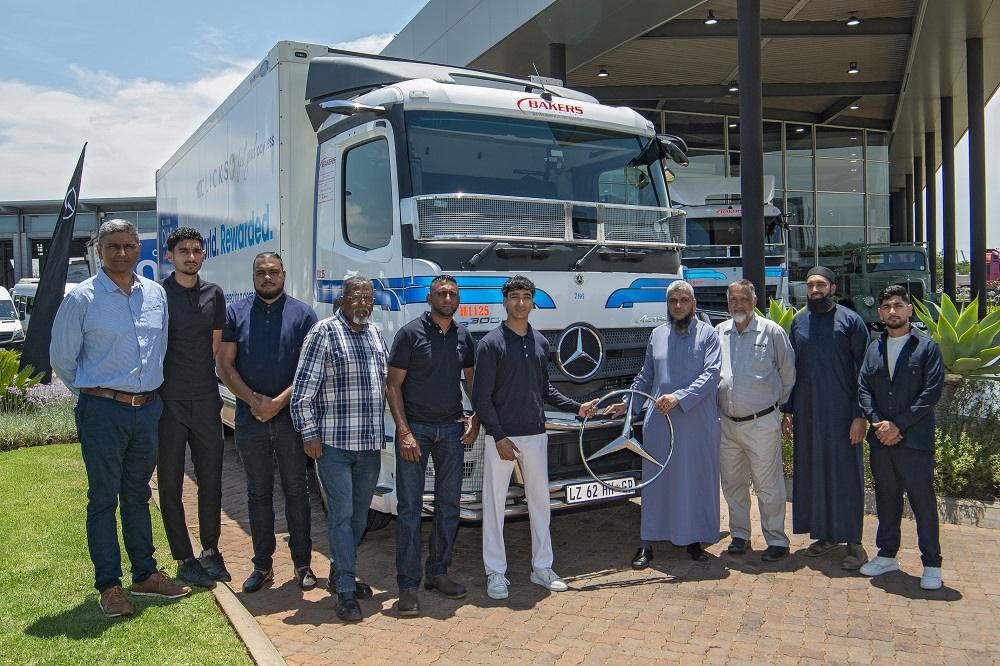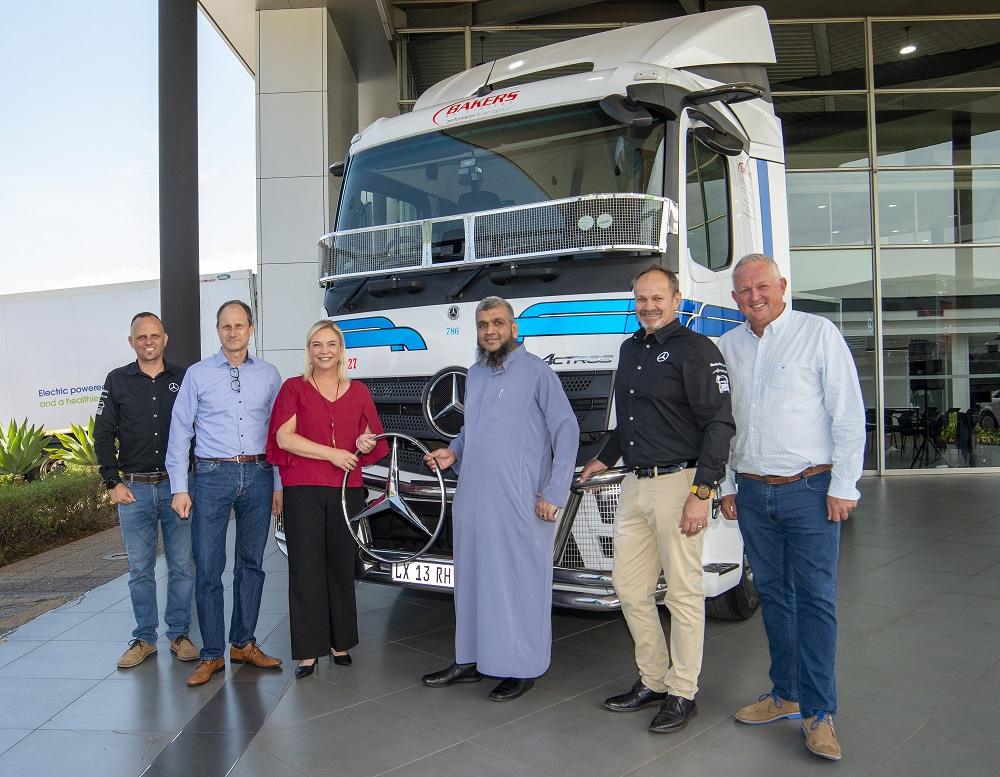

Electric trucking in Southern Africa is moving beyond demonstrations and into commercial ownership. Bakers S.A. Limited has acquired three Mercedes-Benz eActros 300 trucks after extensive real-world trials, marking an important milestone for battery-electric transport and growing fleet confidence in alternative drivetrain technology.
A MILESTONE FOR ELECTRIC TRANSPORT
For transport operators across Southern Africa, the transition to electric trucks has always raised some practical questions. Can the technology handle daily delivery requirements? Will the energy savings justify the investment? And perhaps most importantly, can the vehicles deliver the reliability and uptime that businesses depend on?
Bakers S.A. Limited is taking another step towards answering those questions, becoming the first customer in Southern Africa to purchase three Mercedes-Benz eActros 300 battery-electric trucks through Daimler Truck Southern Africa (DTSA).
The acquisition comprises an eActros 300L 4×2 Rigid, an eActros 300L 6×2 Rigid and an eActros 300LS 4×2 City Tractor, introducing different vehicle configurations into the company’s operations.
The milestone follows Mercedes-Benz Trucks’ introduction of its electric range to Southern Africa in 2024, accompanied by a customer demonstration programme to help operators assess the technology under everyday working conditions.
Bakers did not decide based on a brochure or a short demonstration drive. The company had already spent considerable time evaluating the trucks, gaining first-hand experience of their performance, energy consumption and operational suitability.
PROVING THE BUSINESS CASE
Commercial transport has a straightforward way of measuring progress. A new technology must either improve productivity, reduce operating costs or provide a meaningful advantage to the business.
Battery-electric trucks face an additional challenge because operators must consider charging infrastructure, route planning, vehicle utilisation, and the costs of moving away from conventional diesel power.
Bakers was among the early participants in Mercedes-Benz Trucks’ electric vehicle trial programme, allowing the company to evaluate the eActros against its own operating requirements.
According to DTSA, the trials showed significant energy cost savings, giving Bakers the confidence to commit to purchasing the three vehicles.
The development is particularly relevant for closed-loop distribution, final-mile deliveries and medium-distance transport applications, where predictable routes and planned charging opportunities can make electric vehicles easier to integrate.
For operators, that distinction matters. Electric trucks are not necessarily suitable for every route or application, particularly where charging infrastructure remains limited. However, matching the technology to the right operation can help make the business case considerably more attractive.
The real question is no longer simply whether an electric truck can move a load. It is whether it can do so consistently, efficiently and at a commercially sustainable cost.
A PARTNERSHIP BUILT OVER TIME
The relationship between Bakers and Mercedes-Benz Trucks extends well beyond the latest electric vehicle acquisition.
The transport company has maintained a longstanding partnership with the manufacturer, making the transition to battery-electric technology another development in a relationship built around fleet investment and operational requirements.
Abdool Kader Tayob, Chief Executive Officer of Bakers S.A. Limited, says the acquisition reflects the company’s commitment to exploring technologies that can improve efficiency and support its longer-term sustainability objectives.
According to Tayob, the business intends to continue developing competitive transport solutions for closed-loop and final-mile distribution while progressively expanding its experience into medium-distance operations.
Olaf Petersen, Vice President of Sales and Marketing at DTSA, believes customers like Bakers are important in demonstrating how alternative drivetrain technologies can work when matched to suitable applications.
The manufacturer acknowledges that battery-electric truck adoption in Southern Africa has progressed more gradually than initially anticipated. However, rising energy costs and the need to improve operational efficiency continue to encourage transport companies to investigate alternatives.
That is an important consideration. Fleet operators cannot afford to introduce new technologies simply because they represent the future. They need solutions that support today’s business requirements while preparing for tomorrow’s challenges.
MORE THAN A VEHICLE SALE
The handover also marks a milestone for Sandown Commercial Vehicles Centurion, the first Mercedes-Benz Truck dealership in South Africa to sell a battery-electric truck.
For the dealer network, the development signals a shift in the type of support commercial vehicle customers will increasingly require.
Electric trucks introduce additional considerations around charging, technician training, high-voltage systems and maintenance procedures. Supporting these vehicles therefore requires more than traditional workshop capabilities.
Mark Croxon, Chief Executive Officer of Sandown Commercial Vehicles Centurion, says the sale reflects the strength of the relationship between the customer, dealer and manufacturer as the commercial transport industry explores new technologies.
For operators considering electrification, dependable dealer support will remain an important part of the purchasing decision.
After all, buying an electric truck is one thing. Keeping it working is another.
A vehicle standing idle because of technical problems or charging limitations can quickly undermine the savings that initially made the investment attractive. In commercial transport, uptime remains part of the business model, regardless of what powers the vehicle.
ELECTRIFICATION IN PRACTICE
The introduction of battery-electric trucks into commercial fleets represents a gradual but important change in Southern Africa’s transport industry.
Diesel continues to dominate road freight operations, particularly over long distances where established refuelling infrastructure and operational flexibility remain important advantages.
Electric trucks, however, are beginning to demonstrate their potential in applications where routes, distances and vehicle schedules allow operators to plan charging and energy use more effectively.
The eActros 300 acquisition shows the value of letting customers test vehicles within their own businesses before making major investment decisions.
Rather than relying entirely on manufacturer projections, operators can assess actual energy consumption, charging requirements, driver experience and operational performance.
For Bakers, the trials have provided sufficient confidence to move from evaluation to ownership, an important step in determining how battery-electric technology might feature in its future fleet strategy.
As more transport companies gain practical experience, the industry will have a stronger foundation for evaluating the costs and benefits of electrification.
The transition will not happen overnight, nor will every operator follow the same route. What matters is finding applications where the technology can make financial and operational sense.
LAST WORDS
The sale of three Mercedes-Benz eActros 300 trucks to Bakers S.A. Limited represents an important milestone for Daimler Truck Southern Africa and the development of battery-electric commercial transport in the region.
Following extensive trials and reported energy cost savings, Bakers has moved beyond evaluating electric trucks to making them part of its fleet investment strategy. The acquisition also marks Sandown Commercial Vehicles Centurion’s first battery-electric truck sale.
For the wider transport industry, the significance extends beyond the number of vehicles involved. It demonstrates the importance of testing new technology under actual operating conditions before committing to ownership.
Electric trucking still faces challenges, particularly around infrastructure, initial investment and application suitability. However, developments such as this provide a clearer picture of where the technology can begin to earn its keep.
In commercial transport, progress isn’t measured by how impressive a truck looks at its unveiling. It is measured by what happens when the demonstration ends, the keys are handed over, and the vehicle gets to work.
Report by Haulin’ News | Images © Daimler Truck Southern Africa