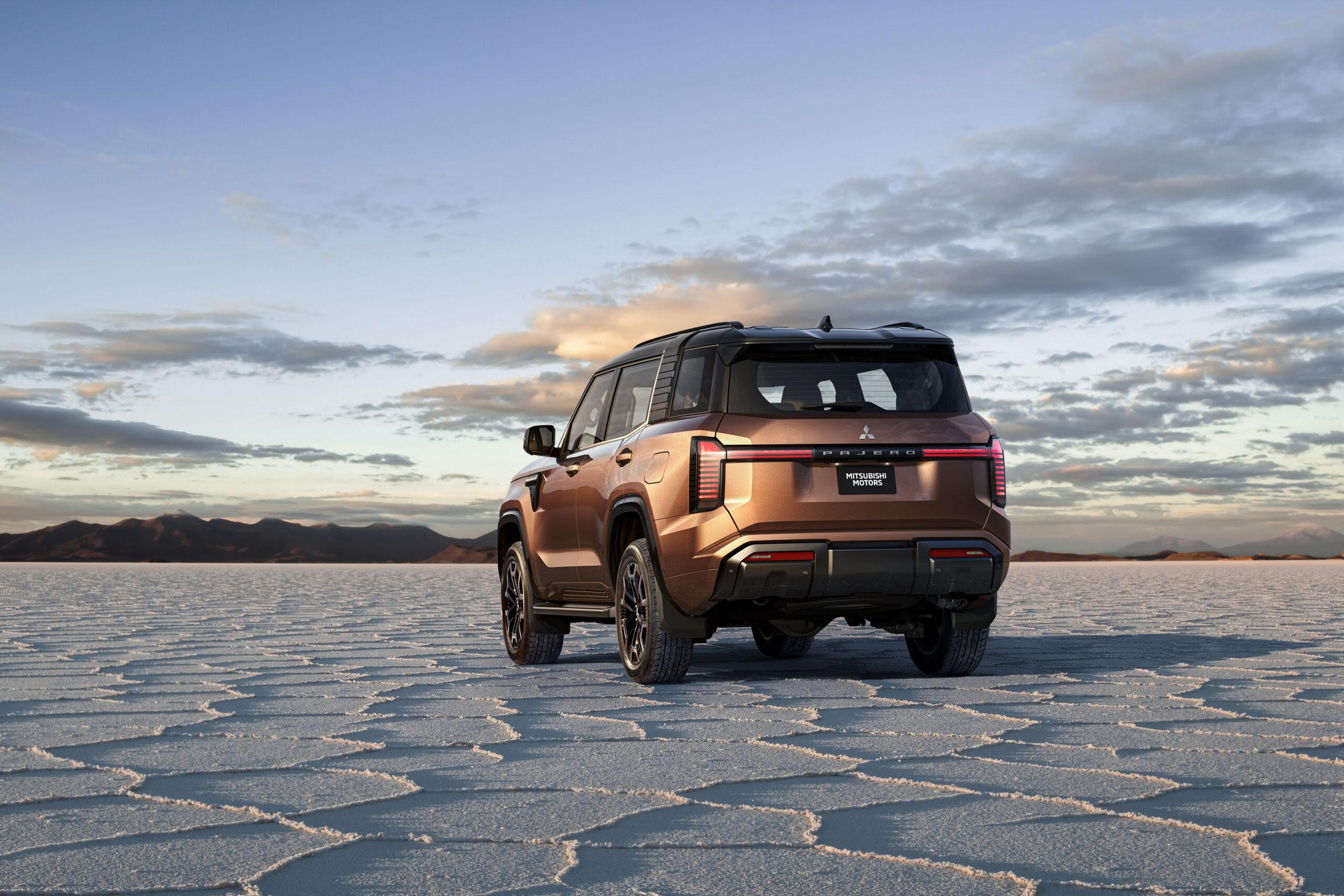
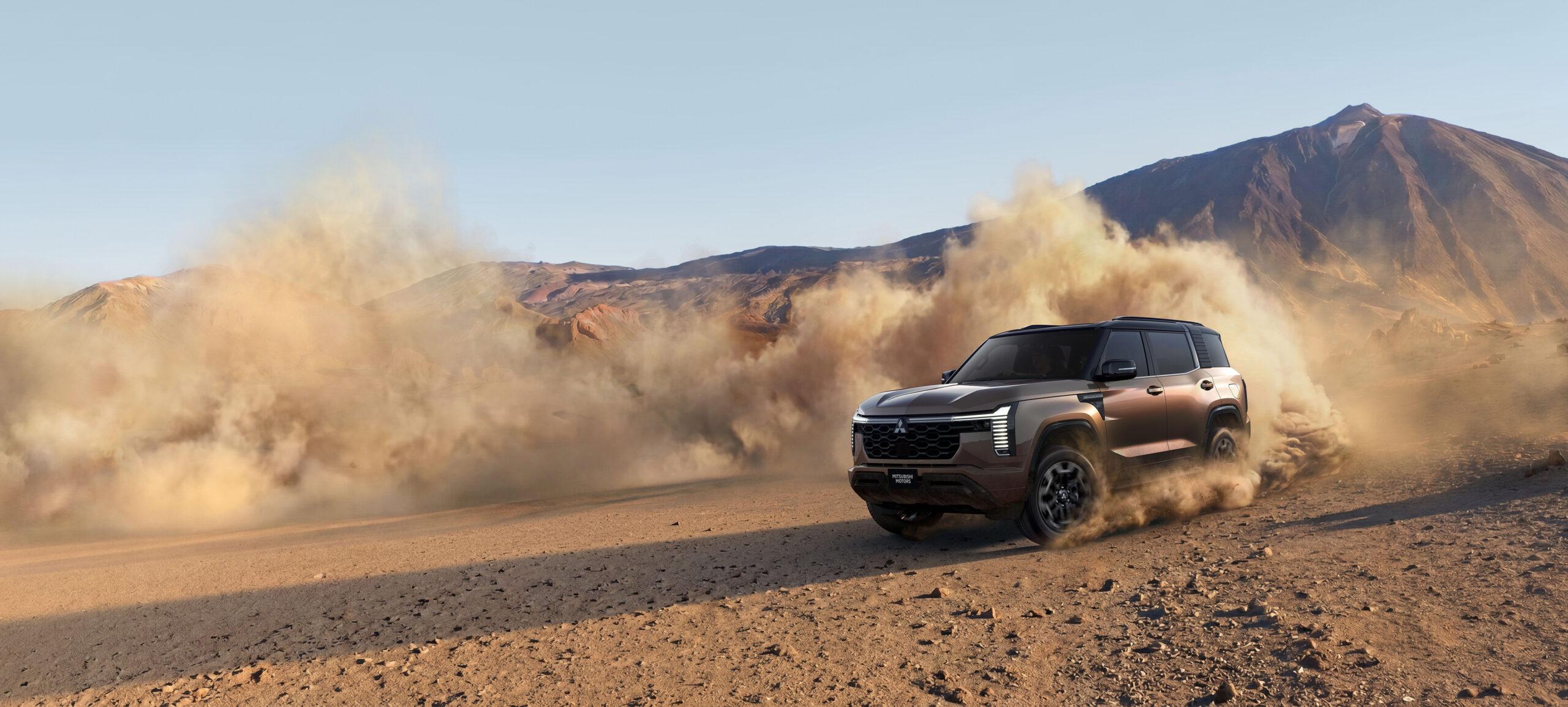
Five years after disappearing from the global stage, one of Mitsubishi’s most recognisable nameplates is back. The all-new Pajero returns with diesel power, a ladder-frame chassis, serious Four Wheel Drive hardware, and enough modern technology to take an old favourite into an entirely new generation.
Certain vehicle names need little introduction, and Pajero is one of them. First launched in 1982, Mitsubishi’s rugged SUV built its reputation across four generations by combining genuine off-road ability with the comfort and practicality required for everyday life.
More than 3.29 million were produced before global production ended in 2021. Along the way, the Pajero also carved its name into motorsport history with 12 Dakar Rally victories, including seven consecutive wins.
Now Mitsubishi has brought the name back, but this is no nostalgic exercise. The new Pajero has been in development for five years and arrives as the brand’s next-generation flagship, destined for more than 100 markets globally, including South Africa.
BUILT ON A LEGACY
The challenge facing Mitsubishi was obvious. How do you modernise a vehicle with such a strong following without losing the characteristics that made people love it in the first place?
The answer appears to have been evolution rather than reinvention.
Underneath the new body remains a highly rigid ladder frame, developed using lessons accumulated through decades of rally competition and testing in demanding environments. Mitsubishi says greater use of high-tensile steel has helped reduce weight while increasing torsional and bending rigidity.
At the front is an independent double-wishbone suspension setup, while the rear uses a newly developed five-link rigid-axle setup.
Mitsubishi has also placed considerable emphasis on what it calls “off-road comfort”, recognising that capability means little if occupants arrive at their destination feeling as though they have completed a Dakar stage themselves.
Strengthened body mounts are designed to reduce unwanted vibration over rough surfaces. At the same time, the suspension has been tuned to balance wheel articulation and off-road ability with a composed ride on tar.
DIESEL DOES THE WORK
Under the bonnet is a specially developed 2.4-litre clean diesel engine equipped with a wide-range single-variable-geometry turbocharger.
Mitsubishi has confirmed 480 Nm of torque, with power delivered through a newly developed 8-speed automatic transmission with Sport mode.
For a vehicle carrying the Pajero badge, however, the drivetrain is only part of the equation.
Super Select 4WD II returns with four selectable settings: 2H Rear Wheel Drive, 4H full-time Four Wheel Drive, 4HLc with the centre differential locked, and 4LLc, which adds low-range gearing for more demanding terrain.
Mitsubishi’s Super All Wheel Control complements the system, or S AWC, which integrates acceleration, cornering and braking control to manage vehicle behaviour across varying surfaces.
Seven drive modes are available: Normal, Eco, Gravel, Snow, Mud, Sand and Rock.
And the numbers suggest Mitsubishi has not forgotten what the Pajero badge is supposed to represent. Ground clearance stands at 230 mm, with a 30.4-degree approach angle, a 22.6-degree breakover angle, and a 25.8-degree departure angle.
OLD NAME, NEW SUIT
While the engineering remains rooted in the Pajero philosophy, the design has moved firmly forward.
Mitsubishi calls its new design concept “Grand Charisma”, combining strong horizontal lines, pronounced wheel arches and upright proportions with several references to previous generations.
The C pillar takes inspiration from the roll bar of the original Pajero, while the hexagonal treatment at the rear references the externally mounted spare wheel of earlier models.
Inside, the connection with the past continues, although the technology certainly does not.
Two 14.3-inch displays dominate the dashboard, with graphics that include a modern interpretation of the Pajero’s familiar triple meter arrangement. Drivers can call up information including altitude, compass heading, temperature, vehicle pitch and roll angles and Active Yaw Control status.
Wireless smartphone connectivity is included, while a 12-speaker Dynamic Sound Yamaha Ultimate audio system, jointly developed with Yamaha Corporation, takes care of entertainment.
Soft-touch materials, improved sound insulation and generous accommodation across the seating rows reinforce the Pajero’s new role as Mitsubishi’s flagship.
TECHNOLOGY ON WATCH
The new generation also brings a substantial step forward in driver assistance and safety.
Mitsubishi’s MI PILOT combines Adaptive Cruise Control and Lane Keep Assist to reduce driver workload on longer journeys, while Forward Collision Mitigation, Predictive Forward Collision Warning, Front Cross Traffic Alert and Emergency Lane Assist form part of the preventative safety package.
Eight airbags are fitted, including Mitsubishi’s first SRS centre airbag.
A 3D Multi Around Monitor uses four cameras to create a comprehensive view around the vehicle, helping not only when manoeuvring in tight urban spaces but also when placing the Pajero accurately over difficult terrain.
It is an interesting combination. Technology has moved considerably since the previous Pajero bowed out, but Mitsubishi appears determined that those systems should complement its off-road capability rather than replace it.
SOUTH AFRICA BOUND
For South Africans, perhaps the most important news is that the new Pajero is coming.
Production will take place at Mitsubishi Motors’ facility in Thailand, with the SUV destined for more than 100 countries, including South Africa.
“The Mitsubishi Pajero was always well loved by both the South African public and media for the way that it combined modern luxuries and tried and trusted mechanics. It is the perfect vehicle for adventurers looking to explore our beautiful continent,” says Lerato Nonyane, General Manager: Product & Marketing at Mitsubishi Motors South Africa.
Local specification, model derivatives, pricing and arrival timing will ultimately determine exactly where the new Pajero sits in an increasingly competitive SUV market.
But the ingredients are certainly familiar: diesel torque, a ladder frame, low-range gearing and a name with more than four decades of history behind it.
LAST WORDS
Bringing back a badge like Pajero comes with expectations, and plenty of them. Mitsubishi could easily have softened the formula, but the important ingredients remain: a ladder frame, diesel power, proper Four Wheel Drive hardware and genuine off-road intent. The technology may have moved on, but the mission hasn’t. The Pajero is back, and thankfully, it still sounds like a Pajero.
Report by MUKOMA BRYAN | Images © MITSUBISHI MOTORS SOUTH AFRICA