Across Africa’s freight corridors, efficiency has become critical to survival. Rising fuel costs, tighter margins and increasing pressure on fleet performance continue to force operators to rethink how goods move across the continent.
BUILT AROUND EFFICIENCY
For fleet operators across Africa, fuel remains one of the single biggest operating expenses. In heavy-duty transport, it can account for a major portion of total running costs, particularly on long-haul routes linking ports, warehouses, farms, mines and regional trade corridors.
Every litre saved matters.
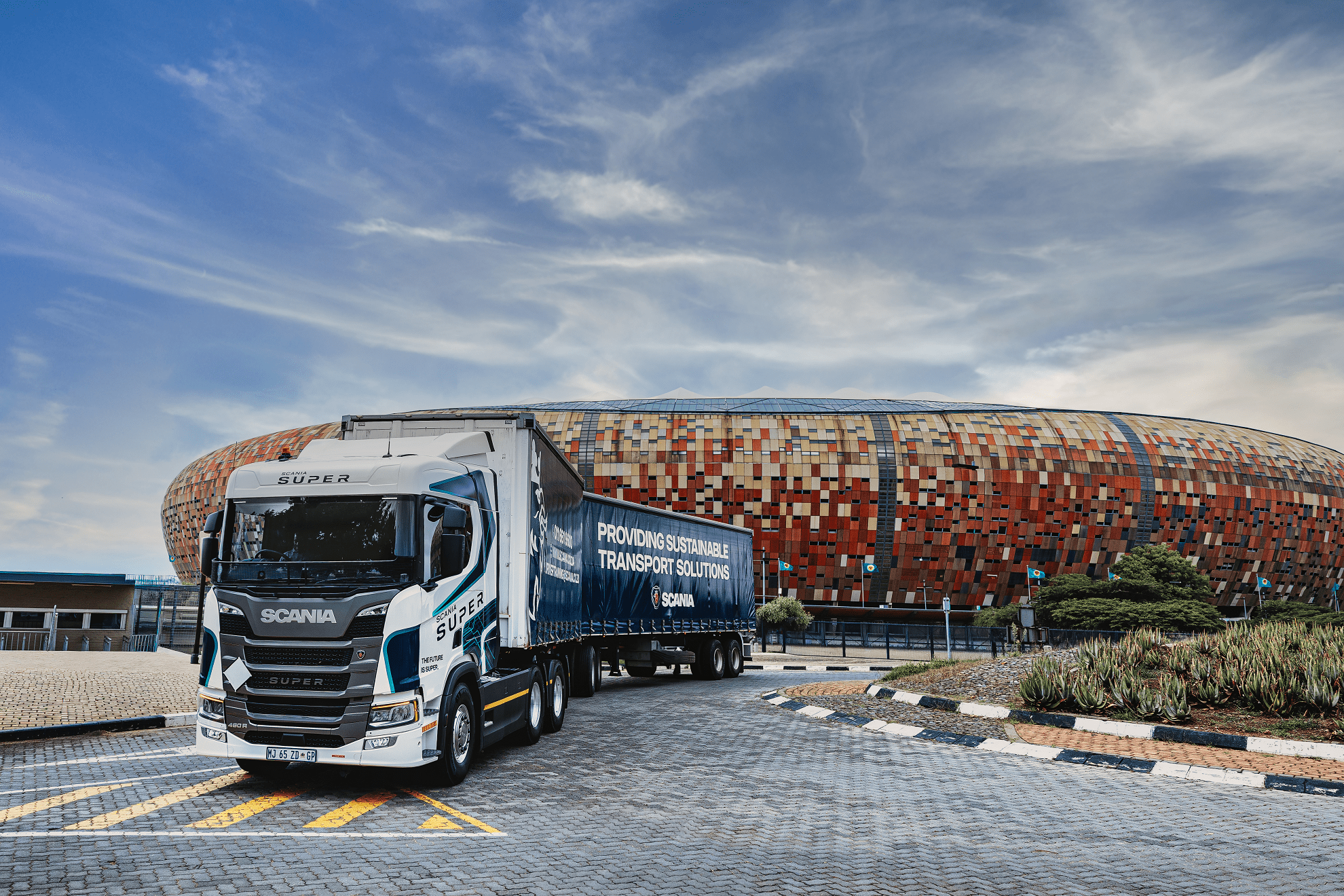
According to Scania, the new Super powertrain delivers fuel savings of up to 8% compared with the previous generation, while the new 13-litre engine achieves up to 50% brake thermal efficiency. In simple terms, brake thermal efficiency measures how effectively an engine converts fuel energy into usable power at the wheels. For operators, that figure is not just an engineering achievement. It speaks directly to fuel economy, cost per kilometre and long-term fleet profitability.
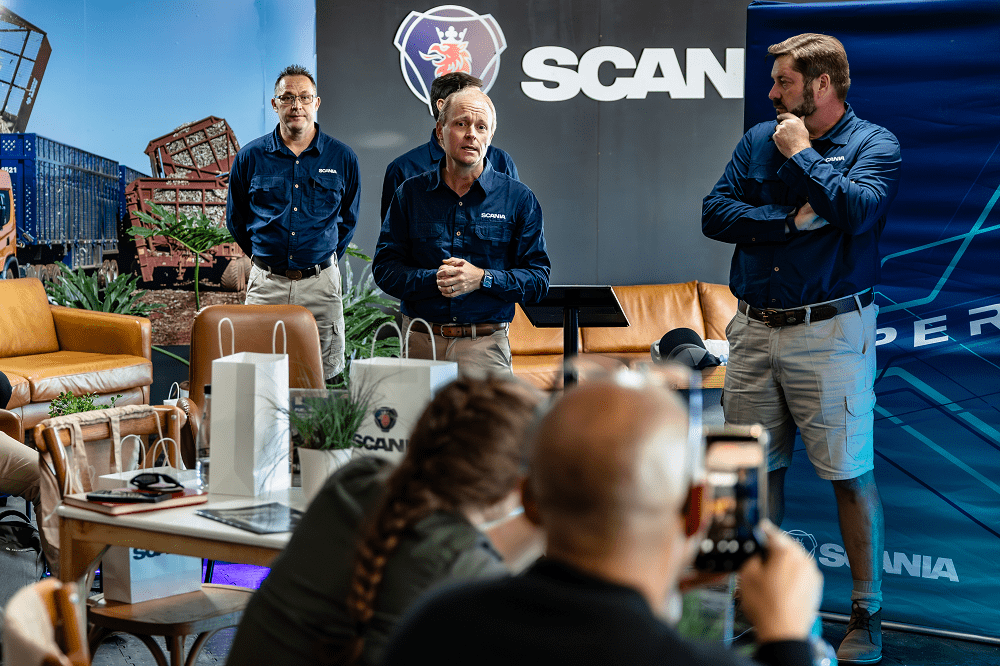
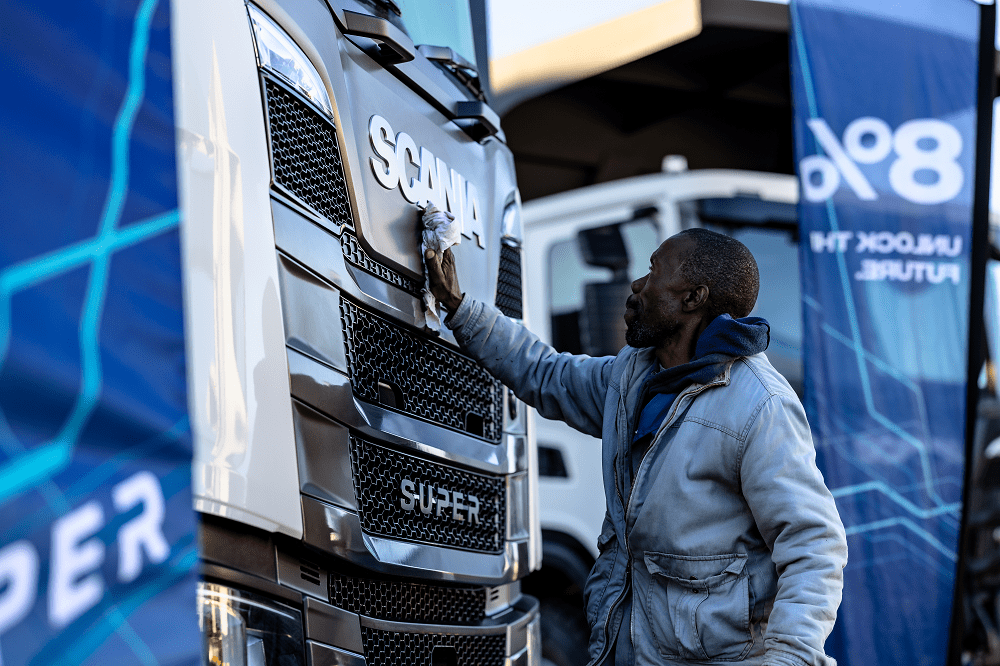
Recently showcased by Scania South Africa during NAMPO Harvest Day 2026 in Bothaville, the truck drew attention from agricultural operators, logistics companies and fleet owners who understand the realities of transport-dependent industries.
THE TECHNICAL SIDE
At the centre of the Scania Super is a newly developed 13-litre engine designed to extract more usable energy from every drop of fuel. The gains are supported by a wider powertrain package that includes enhancements to the Scania Opticruise gearbox, rear axle and Scania’s modular chassis architecture.
The upgraded Opticruise gearbox plays a key role in keeping the engine operating within its most efficient range. Smoother gear selection, improved drivability and better integration between engine and transmission help reduce unnecessary fuel burn, particularly on long-distance routes where gradients, load weight and driving conditions constantly change.
The rear axle has also been refined to support improved drivetrain efficiency. For fleet owners, this matters because small mechanical improvements across the driveline can influence fuel consumption, durability and maintenance demands over time.
Scania’s modular chassis architecture adds another layer of practicality. It allows operators to specify vehicles more closely aligned with their intended applications, whether for long-haul freight, agricultural transport, mining support, regional distribution, or mixed-use fleet work. The benefit is not only flexibility, but also improved payload potential, better vehicle matching and stronger lifecycle value.
DESIGNED FOR AFRICAN FREIGHT REALITIES
Road transport continues to form the backbone of trade movement across much of Africa. From agricultural supply chains and mining operations to retail distribution and industrial logistics, trucks remain critical to moving goods across the continent.
That reality places enormous pressure on fleet reliability and uptime.
Unexpected downtime, weak fuel economy, unnecessary idling, and poor route planning all carry financial consequences for operators already navigating demanding road conditions, long distances, border delays and rising input costs.
The Scania Super has been developed with those realities in mind.
Rather than focusing purely on headline performance figures, Scania’s latest powertrain places greater emphasis on predictable operating efficiency, lower running costs and long-term business value.
EFFICIENCY AS A BUSINESS TOOL
For Scania Southern Africa, efficiency is no longer just an engineering discussion. It has become a core business requirement for operators looking to remain competitive.
“We are operating in an environment where efficiency is no longer just a technical performance metric. It has become a key driver of both profitability and sustainability,” says Erik Bergvall, Managing Director at Scania Southern Africa.
“Customers are increasingly focused on what efficiency delivers per kilometre, per load and across the full lifecycle of the vehicle.”
That shift reflects broader changes within the freight industry itself. Operators are looking beyond brochure figures and marketing claims. They are evaluating how vehicles perform over time, how reliably they stay on the road and how effectively they support operational stability.
For businesses operating large fleets, even small efficiency gains multiplied over hundreds of thousands of kilometres can make a significant commercial difference.
SUSTAINABILITY THAT WORKS TODAY
While the global transport industry continues exploring alternative fuels and lower-emission technologies, Scania believes there is still significant value in improving the efficiency of existing internal combustion platforms.
Lower fuel consumption reduces emissions intensity. Better payload optimisation reduces wasted trips. Improved uptime increases productivity from existing fleet investments.
“Sustainability in transport is determined by how efficiently goods are moved today, not only by future energy transitions,” says Mark Templeton, Sustainability Manager at Scania South Africa.
“Improving efficiency within current fleets is one of the most immediate and scalable ways to reduce environmental impact and lower fuel costs.”
It is a practical approach, particularly in African markets where operators continue to balance sustainability expectations with infrastructure limitations, route demands and commercial realities.
MORE THAN JUST A TRUCK
The Scania Super represents more than a new powertrain launch. It reflects the growing importance of operational intelligence within modern freight movement.
For transport businesses across Africa, success increasingly depends on efficiency, reliability and the ability to move goods consistently under demanding conditions.
That is why the conversation around commercial vehicles continues shifting away from simple horsepower figures towards measurable operating value.
At the Bothaville showcase, the Super attracted strong interest from operators across agriculture, logistics and freight sectors, industries where transport efficiency directly affects productivity and profitability every single day.
LAST WORDS
The Scania Super arrives with a clear message for African fleet operators: efficiency must pay its way.
With its new 13-litre engine, improved Opticruise gearbox, refined rear axle, modular chassis architecture and claimed fuel savings of up to 8%, the Super positions itself as a serious long-haul solution for operators focused on lowering running costs, improving uptime and moving freight smarter across Africa.
Report by Haulin’ News | Images © Scania South Africa